

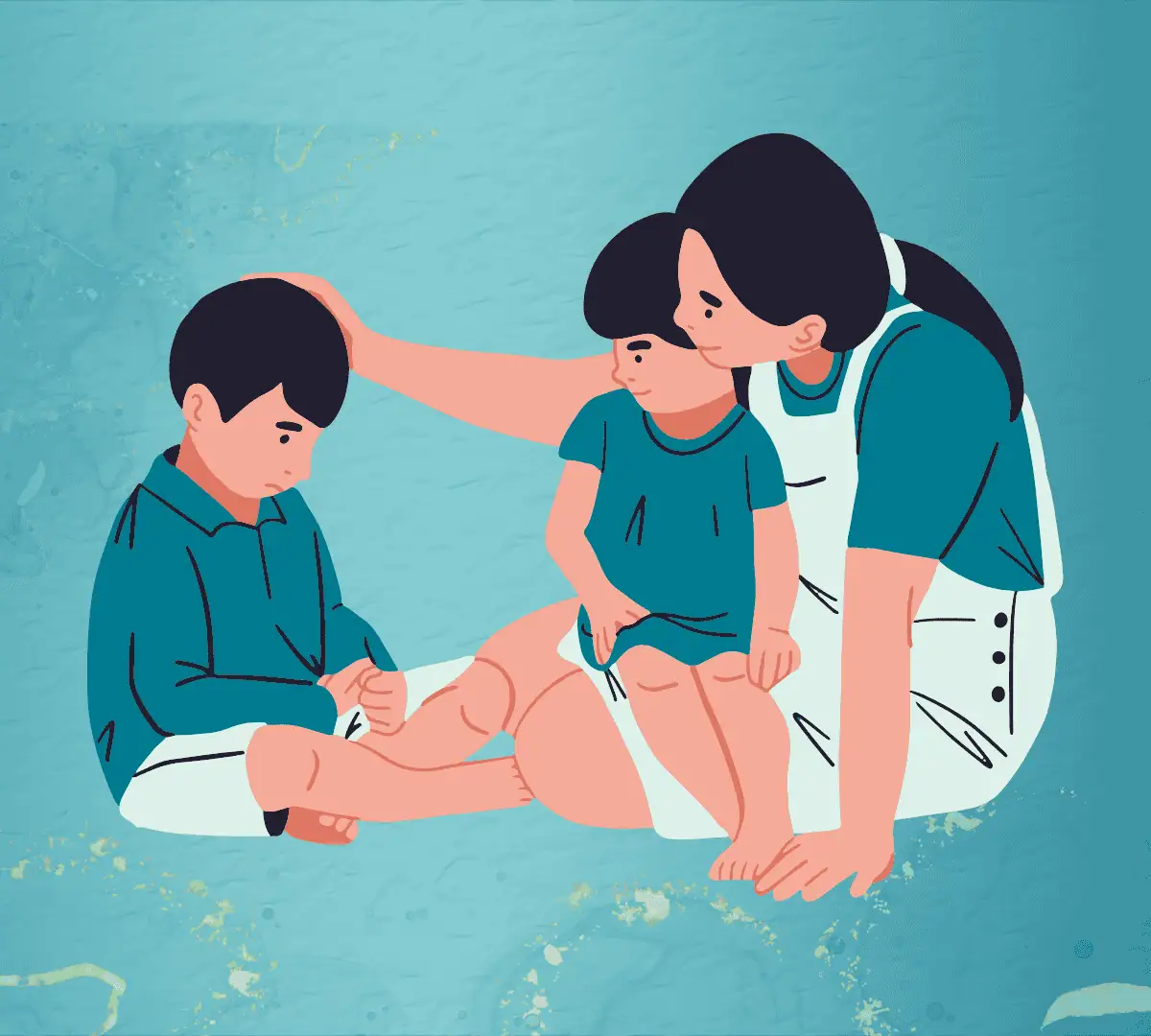
There are moments in parenting that hurt more than sleepless nights or tantrums.
It’s when your child is physically present: eating at the same table, living under the same roof – yet emotionally distant.
When conversations turn into one-word answers.
When you ask, “What’s wrong?” and hear “Nothing.”
When your child stops coming to you.
For many parents, this silence feels confusing, frightening, and deeply personal.
When a child stops talking, it’s easy to assume the worst:
But most often, silence is not rejection.
It is protection.
Children withdraw when:
Silence becomes a safer option than speaking and being misunderstood.
Parents experiencing this silence often carry quiet emotions:
Many parents tell themselves they must stay strong, patient, and composed, even when inside they feel lost.
These feelings don’t mean you’re a bad parent.
They mean you’re a concerned one.
A child doesn’t stop talking overnight. The distance usually builds slowly.
Some common reasons include:
Children often stay silent not because parents don’t care, but because they care too much and don’t want to create conflict or worry.
It’s natural for parents to respond with:
But to a child, this can feel overwhelming.
When they sense pressure to talk, they may retreat further, not out of defiance but self-preservation.
Connection cannot be forced.
It has to feel safe.
Sometimes what your child needs most is not solutions, but space – emotional space where they are not analysed, corrected, or rushed.
Small shifts can help:
Trust rebuilds in quiet moments, not confrontations.
There are times when love and patience alone don’t feel like enough, and that’s okay.
Parent–child counselling offers:
Counselling is not about pointing fingers.
It’s about helping families reconnect with each other.
If your child has grown quiet and you’re unsure how to reach them, it doesn’t mean the bond is broken.
It means it may need gentle support.
At Manospandana, we work with parents and children to rebuild trust, communication, and emotional connection at a pace that feels safe for everyone involved.
If you’re feeling stuck, support is available.
You don’t have to wait until things get worse to ask for help.
Want more help improving your parent-child relationship? See our full Parent-Child Relationship guide.
 Optimized by Seraphinite Accelerator